
When Beauty Is a Survival Strategy - And what happens when it stops working.
Mar 02, 2026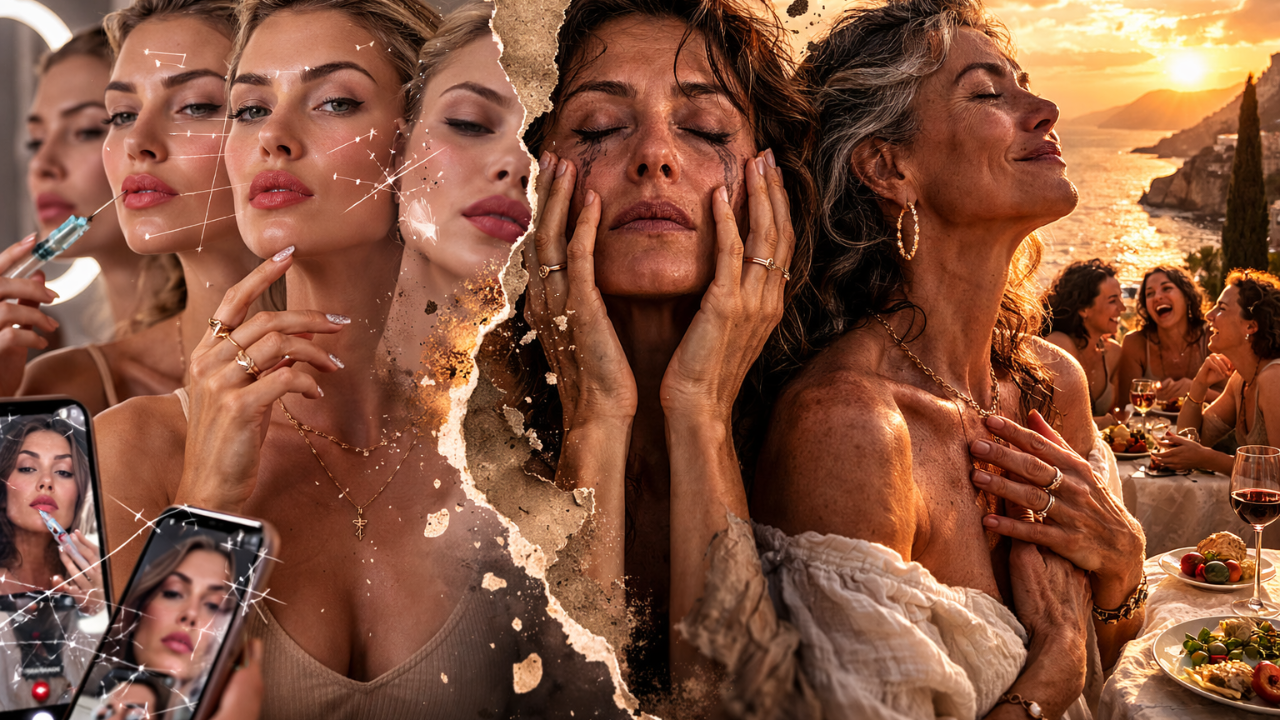
In the journey of healing from trauma, there's a pivotal phase I call Post-Survival Identity Reconstruction. It's that space where survival mode finally loosens its grip, and the identities we've built to protect ourselves begin to unravel. For many women, one of the first to destabilize is the core belief: I am my desirability. This isn't about vanity—it's a deeply adaptive response to a world that often equates a woman's worth with her appearance. But when that strategy stops delivering safety, what comes next?
Let's unpack this with psychological depth, cultural context, and a clear-eyed view—no rose-tinted nostalgia for "simpler times." We'll draw from Internal Family Systems (IFS) therapy to understand the inner dynamics, while acknowledging how societal forces amplify these patterns.
1. Beauty as a Manager Strategy: The IFS Lens
In trauma-informed frameworks like IFS, our psyche develops "parts" to navigate threats. Managers are proactive protectors—they step in to control situations before pain hits. For many women with attachment trauma, beauty becomes a star manager part. It's not frivolous; it's strategic.
This manager might dictate:
- Strict control over food and weight to maintain an "ideal" shape.
- Curated clothing and posture to project appeal.
- Vigilant monitoring of facial expressions to seem pleasing.
- Efforts to defy aging through skincare, workouts, or procedures.
- Regulation of sexuality to leverage desire.
Why does this part take charge? Because in the past, beauty delivered tangible safety:
- Attention that warded off isolation.
- Protection from harm or neglect.
- Financial stability through relationships or opportunities.
- Social value in a patriarchal system.
- Relational leverage to avoid abandonment.
- Validation that buffered deeper wounds.
Over time, this isn't just a tool—it's who you are. The shift from "I use beauty" to "I am beauty" is seamless, turning a survival tactic into an identity cornerstone.
2. The Trauma Bond with the Body
This wiring starts early. When a girl discovers that being pretty earns better treatment, being sexual draws attention, being thin garners approval, or staying youthful ensures she's chosen, her nervous system links beauty to survival. It's adaptive genius, not superficiality.
The body transforms into:
- A bargaining chip in relationships.
- A shield against rejection.
- A resume for social or professional advancement.
- A contract guaranteeing belonging.
Beneath this manager lurks an "exile"—a vulnerable part holding core fears like invisibility, ordinariness, aging, irrelevance, or being unchosen. The manager's grip tightens to keep these exiles buried. And that's where culture pours fuel on the fire.
3. The Market That Monetizes the Manager
The beauty industry doesn't invent insecurity; it exploits survival strategies born from trauma. Billions are made by whispering to that manager part: "You can stay safe forever."
Think Botox, fillers, filters, skin resurfacing, weight-loss drugs, and endless anti-aging products. These aren't villains in themselves—they're tools. But they target the fear: "Don't age, don't fade, don't become invisible." The manager sighs in relief, the exile stays hidden, and capitalism cashes in.
This isn't about shaming choices; it's recognizing how trauma identities intersect with profit-driven systems. When beauty is currency, the market ensures you never run out—or so it promises.
4. Debunking the "Natural Beauty" Nostalgia of the 70s
It's tempting to romanticize the past: "Women in the 70s aged gracefully!" But let's not distort history. Patriarchy, objectification, diet culture, and rigid beauty standards persisted. What differed was visibility and access.
In photos from Italy in the 70s, you see olive skin with sun damage, laughter lines, strong hips, thick hair, real teeth, and textured faces—no uniform "Instagram face" or frozen expressions. In poorer countries, where enhancements were out of reach, beauty was tied to vitality, health, fertility, expressiveness, style, and confidence, not eternal youth.
This visibility of aging had a stabilizing effect. When everyone ages openly, it's not a personal failure—it's life. In contrast, a world of perpetual 38-year-olds turns aging into exile territory. But nostalgia ignores that even then, beauty was often survival, just without today's tech arsenal.
5. The Inevitable Identity Collapse
Enter the crisis: Midlife hits, trauma healing progresses, or beauty's returns diminish. The manager panics because "I am desirable" no longer guarantees "I am safe." Who are you without that anchor?
This is the heart of Post-Survival Identity Reconstruction. The grief isn't shallow—it's attachment grief over lost youth, attention, power, leverage, and the fantasy of eternal choice. It's raw, disorienting, and necessary for growth.
6. Artificial vs. Natural Beauty: A Nuanced View
This isn't a moral binary. Artificial beauty—procedures, enhancements, filters—often stems from control, fear, and the manager's drive to preserve youth and image. It freezes time, halting the face's evolution.
Natural beauty, by contrast, roots in vitality, health, authentic expression, accepting life's seasons, and expanding identity beyond the physical. It lets time etch character, deepening rather than denying.
The key question isn't "Did you get work done?" It's "Who decided—the fearful exile, the controlling manager, or your integrated Self?" Choices from freedom feel different than those from survival.
7. Reconstructing Identity Beyond the Body
When beauty loosens as a survival strategy, reconstruction beckons. It's about widening your sense of self into new territories:
- Competence: Claim what you've mastered. Where does your authority shine independent of looks? Knowledge, skills, expertise—these are enduring currencies.
- Depth: Metabolize pain into insight. What wisdom have your experiences forged? This inner richness outlasts any facade.
- Relational Capacity: Build connections based on safety, repair, and genuine love—not seduction. Can you show up fully without performing?
- Embodiment: Reclaim your body for vitality and presence, not display. Feel its strength, not just its appeal.
- Creativity: Let something new emerge that's untethered to youth. What ideas, art, or contributions want expression through you now?
- Spiritual Authority: Embrace your season. Transition archetypes consciously: from Maiden to Lover, Mother, Initiatrix, Crone, Sovereign. Clinging to the Maiden invites illusion; evolving invites power.
Culture peddles eternal youth, but true reconstruction demands archetype shifts.
8. The Radical Question: Who Would You Become?
If beauty couldn't be your currency anymore, who would you be? This query terrifies because it strips away the familiar shield. Yet it's liberating, inviting an identity vast enough to hold all of you.
In Post-Survival Identity Reconstruction, this is the invitation: Let survival loosen, and watch your true self expand. It's not easy, but it's where freedom lives.
If this resonates, I'd love to hear your thoughts in the comments. Have you navigated this shift? What new identities emerged for you?
Lorem ipsum dolor sit amet, consectetur adipiscing elit. Cras sed sapien quam. Sed dapibus est id enim facilisis, at posuere turpis adipiscing. Quisque sit amet dui dui.
STAY CONNECTED
Join the pack.
Receive occasional updates, reflections on the work, and insights from the path. No sales pitches. Just thoughtful writing from the intersection of trauma, neurodivergence, and the sacred.
We hate SPAM. We will never sell your information, for any reason.